Strategy
Word Puzzle Tactics: Finding Words Faster in Any Grid
Word puzzles reward vocabulary less than people assume and search technique far more. Here is how to find words faster in grids of any shape.

The common assumption about word puzzles is that they measure vocabulary. Mostly they do not. Past a fairly ordinary threshold, what separates fast solvers from slow ones is not how many words they know but how efficiently they search for the ones they already know.
That is good news, because search technique is far more improvable than vocabulary. The tactics below apply across word search, crossword-style grids and letter-pool games.
Solve the theme before the grid
When a puzzle gives you a theme or clue, that is not decoration. It is the single most valuable piece of information available. It collapses your search space from "any word in English" to a category you can enumerate from memory.
The right move is to spend fifteen seconds listing candidate words *before* looking at the letters. If the theme is "kitchen", you now have twenty words in mind. Finding a word you are actively looking for is dramatically faster than recognising one you are not, and the theme converts the second task into the first.
 Word FinderEvery puzzle has a theme clue, and the grid reshuffles after each find.Play
Hunt the rare letters
Letters are wildly unequal in frequency. E, A, R, I, O, T, N and S appear constantly. Q, Z, X, J, K and V are rare. In a grid full of common letters, a Q is an enormous clue, because almost every English word containing Q follows it with U, so QU immediately gives you two letters and a very short list of possible words.
Scanning for the rarest letters on the board first is simply better economics than scanning for a word's first letter. You are looking at fewer positions and each one carries far more information.
Work the affixes
English is heavily affixed, and a large share of puzzle answers are a base word plus a standard ending. Learning to see these as units rather than letters is a substantial speed gain:
- Endings: -ING, -ION, -TION, -MENT, -NESS, -ABLE, -EST, -ER, -ED, -LY, -S.
- Beginnings: UN-, RE-, IN-, DIS-, PRE-, OVER-, MIS-.
In word-search grids, spotting an -ING cluster and working *backwards* is often faster than finding the word's start. In letter-pool games it is close to free scoring: if CARE is valid, check CARES, CARED, CARING and SCARE from the same letters. Most players find the base word, submit it, and move on: leaving three answers on the table.
Treat crossing letters as constraints, not decoration
In interlocking grids, every word you place hands you free letters in the words that cross it. This is the same reasoning that drives Sudoku: you are not solving a blank, you are solving a slot with known constraints, and constraints make problems easier.
The practical implication is to place long words early. A seven-letter answer through the middle of a grid may reveal a letter in four other slots simultaneously, turning four open-ended problems into four constrained ones. A short word at the edge reveals one letter at most.
 Word CrossInterlocking grids with a built-in dictionary for words you find by accident.Play
When you stall, stop looking at the pool
The instinctive response to being stuck is to stare harder at the letters. It rarely works, because you have already extracted what you are going to extract from an unstructured set.
Switch to the grid instead. Pick one specific empty slot, note its length and any crossing letters you already have, and solve *that*. "Five letters, second is A, fourth is E" is a tractable problem. "What words can I make from these seven letters" is not, once you have exhausted the obvious.
Say it out loud
Word recognition runs partly through sound, and reading letters silently does not always trigger it. Speaking a cluster (even muttering it) frequently surfaces a word that looking at it did not. It feels faintly ridiculous and it works often enough to be worth the embarrassment.
Re-scan after every find in dynamic grids
Games where the board changes as you solve (tiles falling into gaps, letters resettling) invalidate your mental map with every answer. A position you correctly ruled out thirty seconds ago may now hold something.
This is the most common source of stalling in shifting-grid games. Players build a map, exhaust it, and conclude the level is hard, when in fact the map expired three finds ago. Treat each shift as a new board.
Does any of this build vocabulary?
Honestly, somewhat, but not in the way puzzle marketing usually implies. Repeatedly meeting words in a themed context, and looking up ones you stumbled onto by accident, is a reasonable way to solidify words you half-knew. It is much less effective at teaching genuinely unfamiliar ones.
The habit worth forming is small: when you find a word you did not consciously know, look it up before moving on. Games with a built-in dictionary make this nearly frictionless, and it is the difference between recognising a word and actually acquiring it.
Games mentioned in this guide
 Word & Number
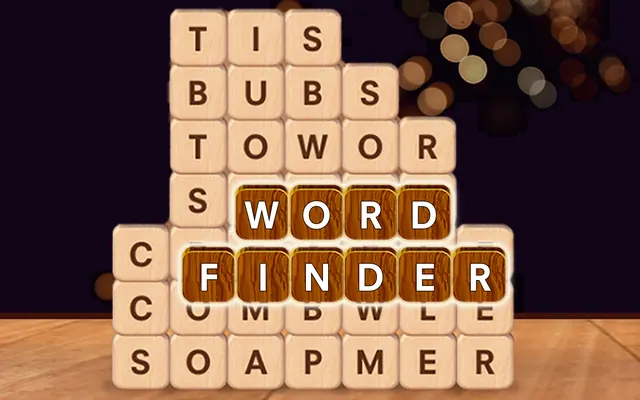
Word Finder
A word search where the grid rearranges itself every time you score.
Phone + desktop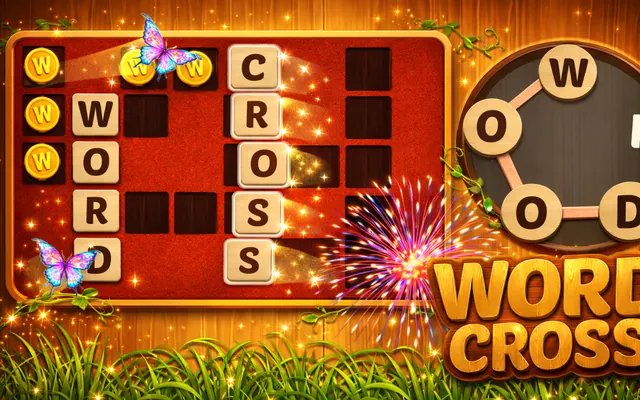 Word & Number
Word Cross
Build crosswords from a handful of letters, one connection at a time.
Phone + desktop Word & Number
Sudoku Online
Four difficulties, four rule variants, and every puzzle solvable by pure logic.
Phone + desktop


